For families
Neptune, told a little more slowly.
The same official pages, with the surprising bits left surprising, and the picture labels left on.
A shorter walk, still from official pages.
A planet someone predicted
Uranus was not moving quite as expected. A mathematician, Urbain Le Verrier, worked out where another planet would have to be. Johann Galle looked there and found Neptune on his first night, on 23 September 1846. [source] [source] That is a good story to tell slowly: you can find a world with careful thinking, and then with a telescope.
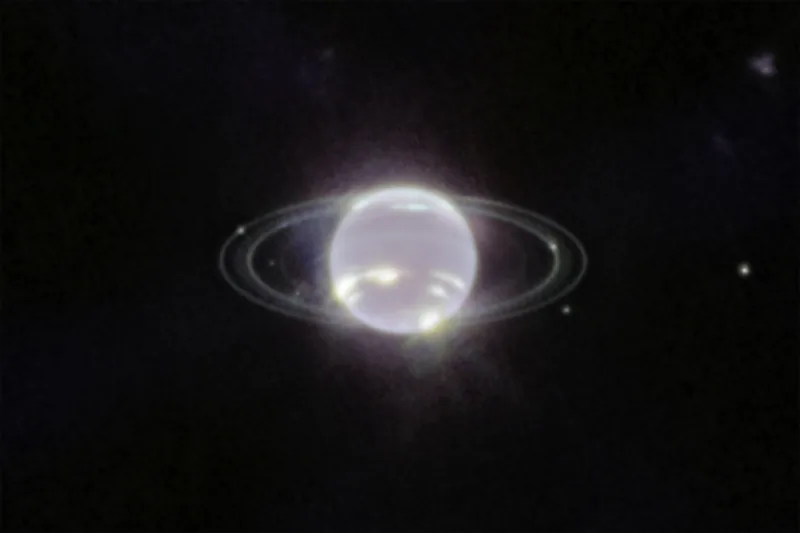
The windiest world
NASA Science calls Neptune the solar system’s windiest world, with clouds of frozen methane moving at more than 1,200 miles per hour. [source] The winds desk also shows the fact sheet’s 0–580 metres per second, so both official wordings stay visible.
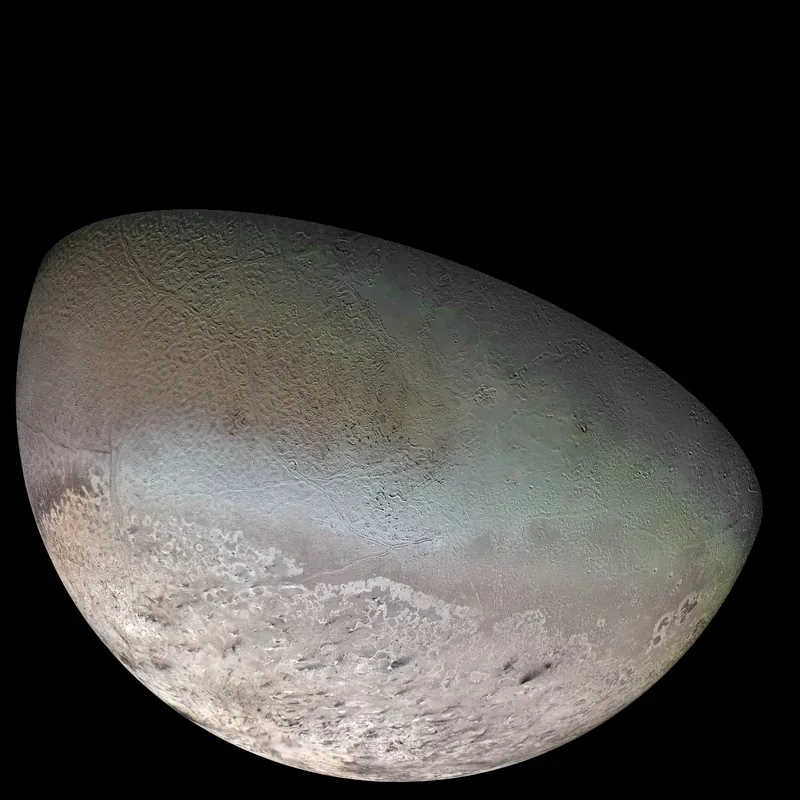
A backward moon
Triton goes around Neptune the “wrong” way, and Voyager found geysers there more than five miles high, even though the surface is extremely cold. [source] Ice can still do surprising things.
A blue that needs a label
Some famous pictures are a deeper blue because they were enhanced to show clouds. Other official pictures, and a later colour-calibrated composite, look paler. Teaching the label is as useful as teaching the colour.
Enjoyed a planet found with a pencil, and the solar system’s windiest world?
No pop-ups. No intrusive advertising. Just interesting stuff. A little support helps the next planets.im site get built.